
In the cookware industry, one truth stands out: every region has its own habits, expectations, and definition of “good cookware.” A pan that sells instantly in South America might not catch any attention in Europe. A pot that Middle Eastern families love may be too large or too heavy for other markets. That’s why understanding market-specific preferences—especially for cookware under 32cm and under 3.0mm thickness—is key to creating products that sell consistently, not just occasionally.
Let’s take a closer look at what buyers in the Middle East, Europe, and South America actually want, and why these details matter for suppliers and retailers looking to stand out.
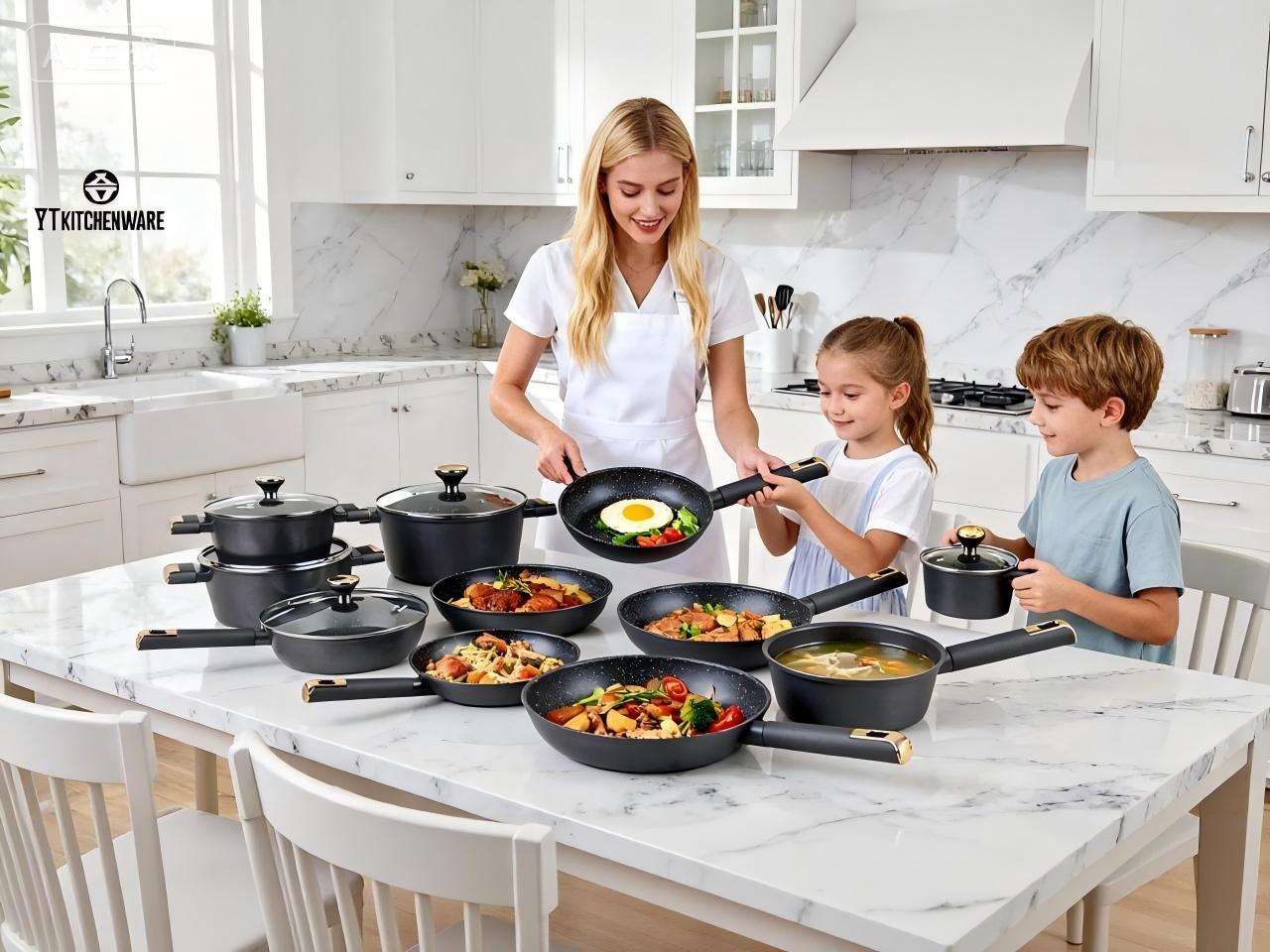
Middle Eastern buyers love cookware that feels strong and heats quickly, but they no longer chase oversized 36–40cm pots the way they did years ago. Modern families, smaller kitchens, and rising logistics costs mean that 28–30cm pots and pans are now the sweet spot. Buyers in this region look for aluminum cookware in the 2.5mm–3.0mm range, strong enough for gas stoves but still light enough for daily use. They appreciate fast heating, even cooking, and a design that looks premium. Mirror-polish finishes, elegant black handles, and clear branding on packaging all help products stand out in stores. In short, they want cookware that feels high-value without being overly heavy or oversized. Practical, stylish, and heat-efficient is the winning combination.
European buyers are different. They prefer precision, safety, and certification above everything. While they accept cookware under 32cm, they especially love 24–28cm pans and casseroles, which fit small stovetops and compact apartments. This region values lighter cookware with 2.0–2.8mm aluminum, durable stainless steel options, and carbon-steel bakeware coated to meet LFGB or FDA standards. They tend to choose simple, modern finishes—satin, brushed, or matte—rather than shiny surfaces. Packaging matters here too: clean designs, minimalist color boxes, eco-friendly materials, and clear safety notes win trust instantly. For European buyers, a product must check three boxes: safe, consistent, and premium-looking. They don’t buy “flashy”—they buy “reliable.”

South America brings another set of expectations. Buyers want cookware that performs well across all heat sources, cooks fast, and looks visually appealing on store shelves. This market loves color—red, blue, orange, and gradient finishes are bestsellers. Cookware sizes between 26–30cm are ideal for everyday meals, and thicknesses around 2.2–2.5mm hit the sweet balance of lightweight practicality and durability. Aluminum fry pans, everyday stock pots, and carbon-steel cake pans are extremely popular, especially when they’re easy to clean and come in multi-piece sets. Attractive color boxes with recipe images or lifestyle photos also help products sell faster. South American customers appreciate value-packed items that look good and feel good in the kitchen—practical and cheerful at the same time.
So what does this mean for manufacturers and brands? It means a single design cannot satisfy every market. You must adjust size, thickness, finishing, handle style, and packaging based on the habits and expectations of each region. The good news is that cookware under 32cm and under 3.0mm thickness fits almost all global markets—it simply needs the right style and marketing angle.
For example, a 30cm aluminum pot at 2.8mm thickness is ideal for the Middle East when paired with a polished finish and a premium color box. That same pot, with a satin finish and LFGB documentation, markets perfectly to Europe. And if you add a bright exterior coating and a lively color box, the same structure becomes a South American bestseller. The product stays the same; the positioning changes—this is where manufacturers win.

Market preference is not random. It’s shaped by cooking habits, family size, kitchen space, energy usage, and local retail trends. Middle Eastern homes cook in richer flavors, more sauces, and larger portions. European kitchens prioritize efficiency, safety, and minimalist style. South American households balance affordability, fun design, and versatility.
Manufacturers who understand these differences don’t just ship products—they ship solutions. They help buyers choose what will actually sell, not what simply looks good on a catalog page. They adapt thickness to reduce costs without sacrificing performance. They adjust designs to fit local tastes. They refine packaging to suit retail shelves. And in doing so, they build long-term trust.
In the end, cookware is more than metal and coating. It’s culture. It’s habit. It’s lifestyle. And when your products match what people actually need in the Middle East, Europe, and South America, you’re not just supplying cookware—you’re creating market-fit products that move fast, build reputation, and turn first-time customers into repeat buyers.