When buyers talk about aluminum cookware in Europe and the US, the conversation has clearly moved past “cheap and lightweight.” Today’s market is much more mature. Consumers care about how cookware looks on the stove, how it feels in the hand, how easy it is to clean after a long day, and whether it fits into a modern kitchen lifestyle. From what we see at the factory level, the most popular aluminum cookware styles in these two markets share one thing in common: they balance practical performance with clean, attractive design.
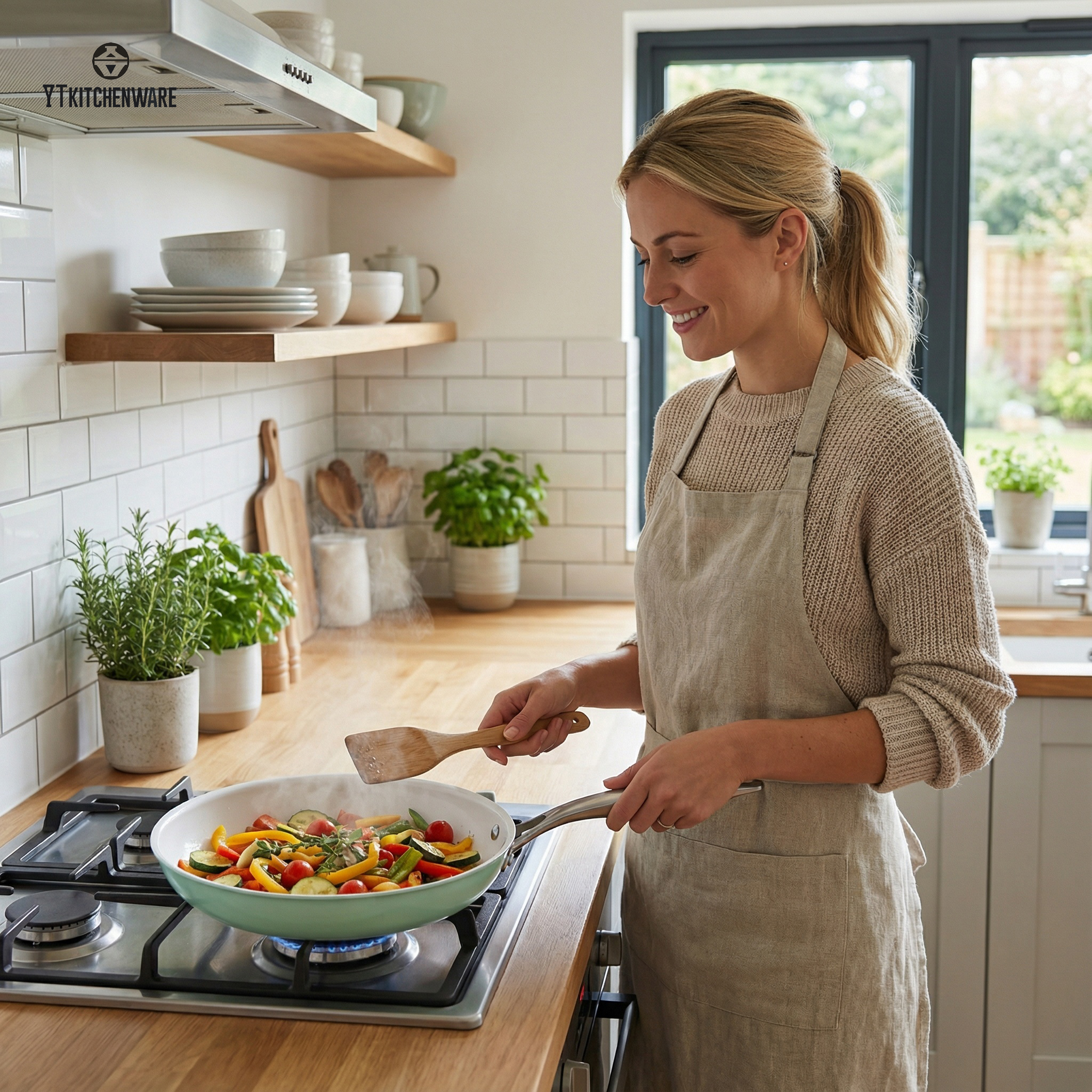
In both Europe and the US, non-stick aluminum cookware remains the top choice for everyday cooking. Frying eggs, sautéing vegetables, quick pasta sauces—people want pans that heat up fast and don’t require a sink full of soaking afterward. That’s why smooth-release non-stick interiors, especially ceramic or water-based coatings, are in strong demand. Buyers increasingly ask about coatings that are easy to clean, low-odor during cooking, and suitable for healthier, low-oil meals. From a factory perspective, this has pushed manufacturers to invest more in stable coating systems and better curing processes, rather than just focusing on price.
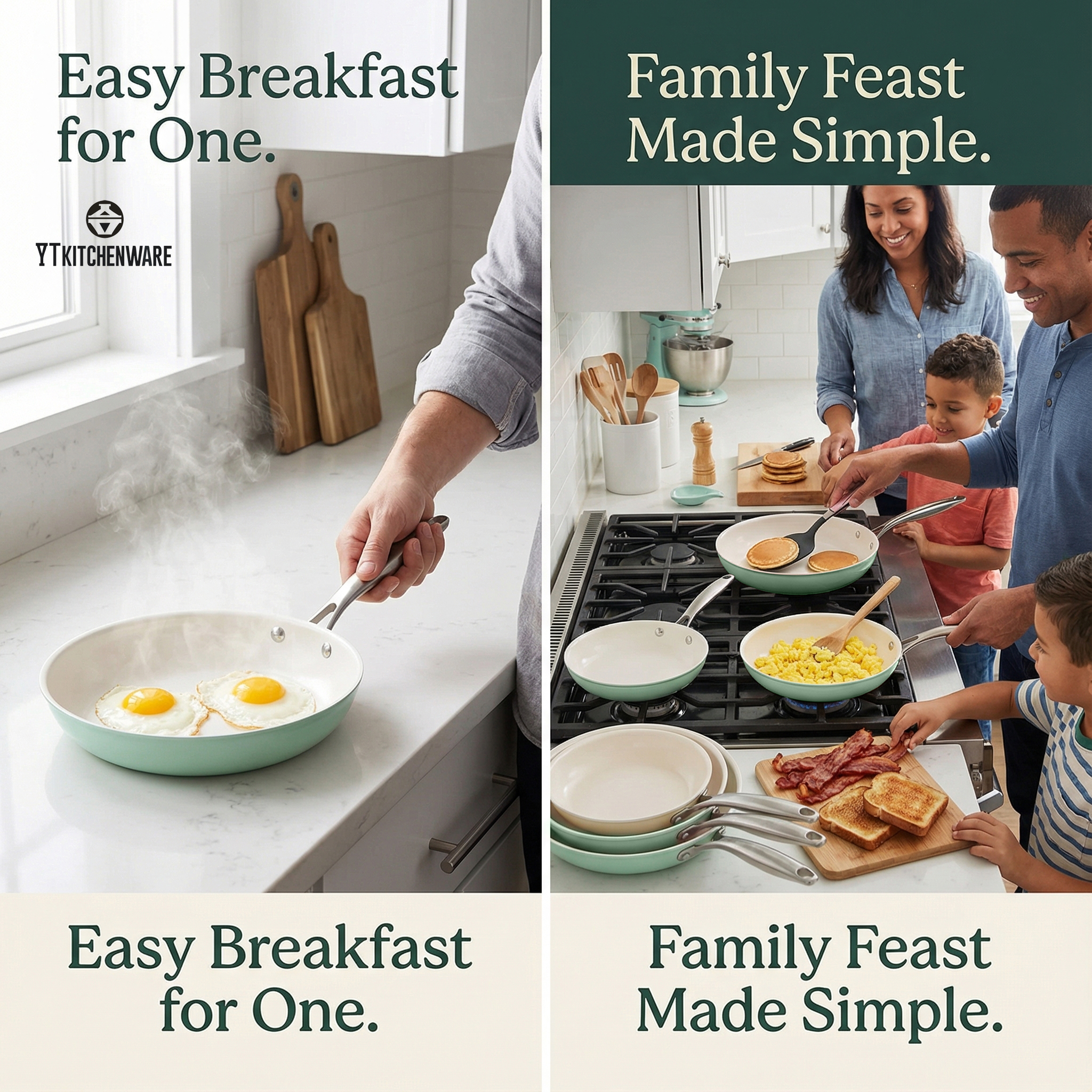
Style-wise, simple shapes dominate. European and US consumers prefer cookware that looks timeless rather than flashy. Straight or gently curved sidewalls, clean rim lines, and balanced proportions sell better than overly decorative designs. This is especially true for frying pans and saucepans under 30 cm, which are the most commonly used sizes in home kitchens. Deep sauté pans with a slightly higher wall are also popular, as they work for multiple recipes without taking up too much space.
Color trends tell another important story. In the US market, soft neutrals and calm colors are winning. Matte black, stone gray, cream white, sage green, and muted blue show up again and again in retail collections. These colors photograph well for online sales and match modern kitchen interiors. In Europe, the trend is similar but slightly more restrained. Earth tones and minimalist finishes are especially popular in Northern and Western Europe, while Southern Europe still appreciates a touch of warmth, such as terracotta-inspired shades or satin metallic finishes. From a production point of view, these preferences have led to higher demand for durable exterior spray coatings that resist discoloration and scratches over time.
Handles are another detail that buyers pay close attention to. In both markets, ergonomic handles with a solid grip are preferred over thin or decorative ones. Stainless steel handles with smooth curves, riveted firmly to the pan body, are widely accepted for their durability and professional look. At the same time, heat-resistant soft-touch handles still have a strong place in entry-level and family-focused product lines. What matters most is comfort and safety—no sharp edges, no loose joints, and no awkward angles. Buyers often test this before anything else.
Lids also influence buying decisions more than many people expect. Tempered glass lids with steam vents are especially popular in the US, where home cooks like to monitor food without lifting the lid. In Europe, glass lids are common too, but metal lids are still used for certain cookware styles aimed at more traditional cooking. From the factory side, offering interchangeable lid options helps brands adapt the same cookware body to different markets without redesigning the entire product.
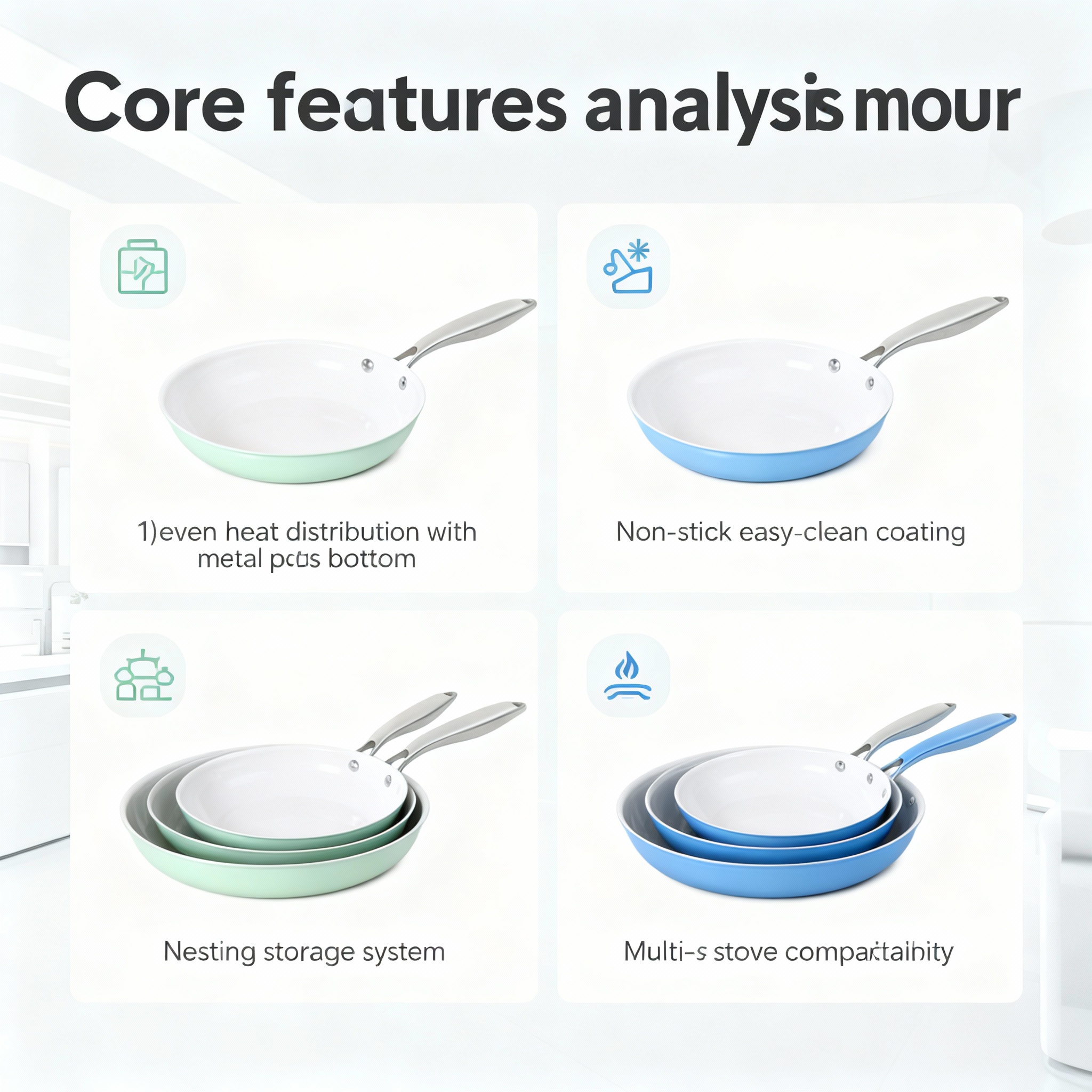
Another clear trend in both regions is multi-stove compatibility. Consumers expect aluminum cookware to work on gas, electric, ceramic, and increasingly induction cooktops. This has made induction-ready aluminum cookware with bonded or pressed stainless steel bases a standard requirement rather than a premium feature. Buyers often ask about base thickness and flatness because uneven bases lead to customer complaints. For manufacturers, this means tighter control during base bonding and forming processes.
Interestingly, while aluminum cookware dominates daily-use categories, many European and US buyers now combine it with tri-ply stainless steel cookware in their product lines. Aluminum non-stick pans handle quick, casual cooking, while stainless steel pieces cover high-heat and long-term durability needs. This mixed offering appeals to modern consumers who don’t want a one-material kitchen anymore. For factories, this creates opportunities to supply complete cookware collections rather than single items.
At the end of the day, popular aluminum cookware styles in Europe and the US aren’t driven by extreme trends. They’re shaped by real kitchens, real habits, and real expectations. Clean design, reliable non-stick performance, comfortable handling, and consistent quality matter far more than gimmicks. Brands that understand this—and factories that know how to turn these preferences into well-made products—are the ones that continue to succeed in these competitive markets.