When you browse cookware—aluminum pots, stainless steel pans, or carbon-steel bakeware—you’ll often see terms like mirror polish, satin finish, or hard anodizing. They sound fancy, but what do they actually mean? And more importantly, why should your customers care? Let’s break it down in a simple, practical, factory-level way.
Mirror Polish: Shiny Looks, Strong First Impression
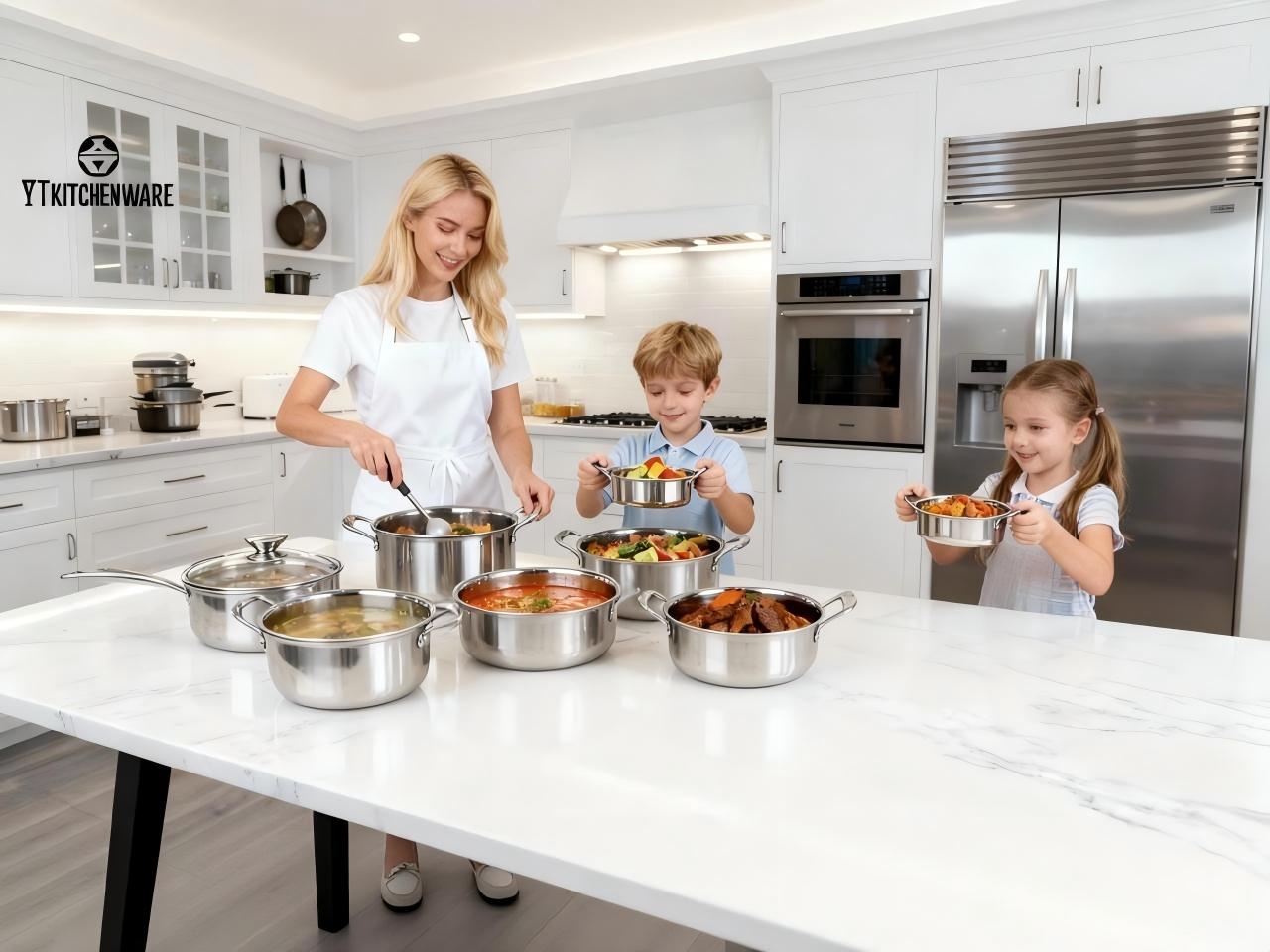
Mirror-polished surfaces are exactly what they sound like—bright, reflective, almost like a mirror.
This finish is achieved through multiple rounds of mechanical polishing, using finer and finer abrasives until the surface becomes ultra-smooth.
Why it matters:
- Premium appearance – Perfect for brands that want their cookware to look high-end on shelves or in lifestyle photos.
- Easier to clean – The smooth surface leaves fewer places for food residue to stick.
- Corrosion resistance – A polished stainless steel surface can better resist stains and rust.
For stainless steel cookware or lids, mirror polish is a popular choice because it instantly signals quality and craftsmanship. In many factories, this finish is also a showcase of polishing skill—consistent shine means tight process control.
Satin Finish: Low-Gloss, Professional, Practical
If mirror polish is the “glam,” then satin finish is the “pro.”
This finish has a soft, brushed texture—smooth to the touch but not shiny. It’s achieved through straight-line brushing or light abrasive polishing.
Why people love it:
- Fewer fingerprints – A big win for daily use and display.
- Professional look – Many chefs prefer the cleaner, understated feel.
- Scratch-friendly – Small scratches blend into the brushed texture instead of standing out.
Satin finish is common in stainless steel cookware, mixing bowls, stockpots, and kitchen tools. For factories, it’s a practical finish with stable output, ideal for large-volume production.

Hard Anodizing: The Toughest Surface Aluminum Can Get
Now we move to aluminum pots and pans. Raw aluminum is soft, but hard anodizing upgrades it into a completely different beast.
Hard anodizing is an electrochmical process that creates a thick, extremely hard oxide layer on the surface.
What makes it special:
- 2–3 times harder than stainless steel – Yes, seriously.
- Highly wear-resistant – Perfect for daily cooking, stirring, scraping.
- Better heat conductivity – Aluminum heats fast and evenly.
- Corrosion-proof and non-reactive – The anodized layer seals the metal.
- Excellent base for non-stick coatings – Improves adhesion and durability.
This finish is widely used for aluminum fry pans, sauce pots, and outdoor cookware, especially when brands want a balance of strength, performance, and light weight. Hard anodizing requires tighter control over temperature, voltage, time, and electrolyte concentration—an area where experienced factories really stand out.
So…Which Finish Should You Choose?
Here’s a quick way to match finishes with products and customer needs:
- If your brand wants a premium, shiny look:
→ Choose mirror polish for stainless steel. - If your brand wants a clean, professional, modern feel:
→ Choose satin finish—great for both SS cookware and utensils. - If your focus is durability, performance, and long use-life:
→ Go for hard anodized aluminum.
Each finish serves its own purpose. What matters most is aligning the finish with your product positioning, target market, and performance expectations.
Why These Finishes Matter for Your Factory or Brand
A good surface finish does more than make cookware look nice—it signals your factory’s quality standards, process control, and production capability.
- Mirror polish shows your polishing line is precise and consistent.
- Satin finish proves stability in brushing and abrasive selection.
- Hard anodizing demonstrates reliable chemical treatment and controlled oxidation thickness.
For buyers, these finishes are not just aesthetic choices—they’re indicators of durability, hygiene, ease of cleaning, and long-term user satisfaction.
Final Thoughts
Mirror polish, satin finish, and hard anodizing each bring something unique to the table. Whether you’re a brand owner choosing your next product line or a factory showcasing your strengths, understanding these differences helps you make smarter decisions—and helps your customers understand exactly what they’re paying for.
A surface finish isn’t just a finish.
It’s your craftsmanship made visible.