In the cooperative ecosystem of the kitchenware industry, suppliers and distributors are not merely in a simple supply-demand relationship, but rather partners pursuing mutual growth and win-win outcomes. From product design and mold development to mass production and packaging delivery, suppliers should focus on providing full-link support to build a solid foundation for distributors to “reduce costs, improve efficiency, and enhance competitiveness,” thereby truly achieving in-depth empowerment.
In the design phase, we abandon the “closed-door innovation” approach and proactively collaborate with distributors to identify market needs: by sharing consumer trend data (such as the popularity of healthy kitchenware and minimalist designs) and integrating distributors’ frontline feedback on regional consumer preferences, we jointly participate in optimizing product solutions. Whether it is adjusting the grip curve of pot handles or developing compact kitchenware sets suitable for small apartments, we adhere to the principle of “creating what the market needs,” endowing products with best-selling potential from the very beginning and reducing distributors’ risks in product selection.
Moving into the mold development phase, we help distributors control costs through technological optimization: we use high-precision mold equipment to extend mold lifespan and reduce loss rates in subsequent production; meanwhile, we offer a “small-batch mold testing” service, allowing distributors to first test the market response of samples before deciding whether to scale up production. This avoids financial pressure caused by excessive mold investment and eases the operational burden on small and medium-sized distributors.
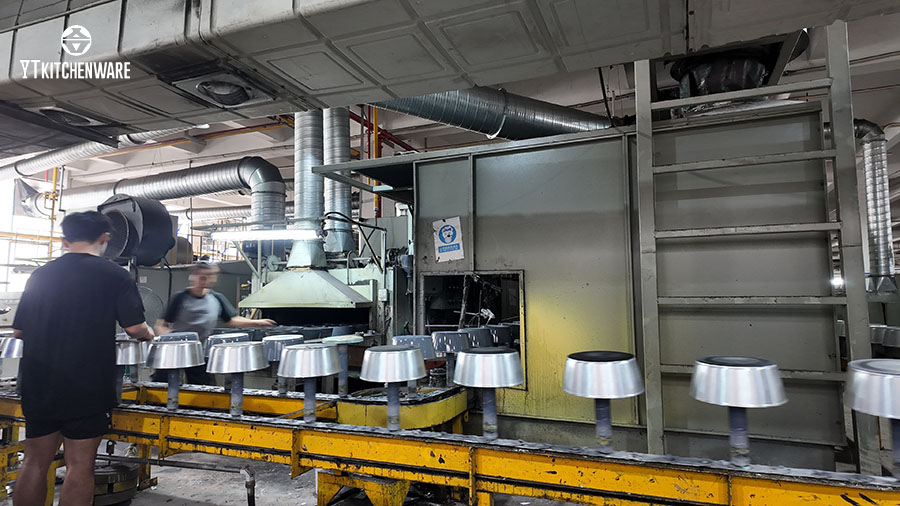
The stability and efficiency of the production phase are crucial for distributors to ensure sufficient supply. We have established a standardized production system and improved production capacity through automated production lines to guarantee order response speed—regular products are arranged for production as soon as possible, and urgent orders are prioritized to prevent distributors from missing sales peaks due to stock shortages; at the same time, we strictly implement quality control processes. Each batch of products undergoes 12 tests, including pressure resistance and high-temperature resistance, and is accompanied by a quality inspection report. This helps distributors prove product quality to end customers and reduce after-sales disputes.
Finally, in the packaging phase, we balance practicality and marketing value: the basic packaging uses shatterproof materials to reduce damage rates during logistics and transportation, lowering distributors’ after-sales costs; we also support customized packaging printing, enabling distributors to print their brand logos or promotional information on the packaging boxes. This turns the packaging into a “mobile advertising space” for distributors, helping them strengthen brand recognition in the terminal market and increase consumer repurchase rates.
From front-end product planning to back-end delivery support, every action of suppliers should revolve around the goal of “making it easier for distributors to sell and operate with peace of mind.” Only in this way can a stable cooperative relationship be built, and long-term win-win results for both parties be achieved.