In modern kitchens, cookware choices center on “health” and “practicality”. Amid upgrades of various materials, aluminum cookware sets have become a family favorite for their unique performance, though they face concerns over “aluminum ion leaching”. Striking a balance between efficiency and safety is key to understanding this cookware.
Health Controversies Solved: Coating Technology Ensures Safety
“Health risks” were once a concern for aluminum cookware—uncoated versions might leach trace aluminum ions with acidic foods or high heat, linked to neurological health. Today, advanced coatings eliminate this issue.
Mainstream aluminum cookware uses hard anodization (forming a dense, corrosion-resistant oxide film to block aluminum-food contact) or food-grade non-stick coatings (e.g., Teflon) for “double protection”. Both meet strict food safety standards; avoiding dry burning and using soft utensils prevents coating damage. Regular brands mark material details and certifications (SGS, FDA) on instructions, helping consumers avoid low-quality products.
Practical Advantages for Modern Cooking
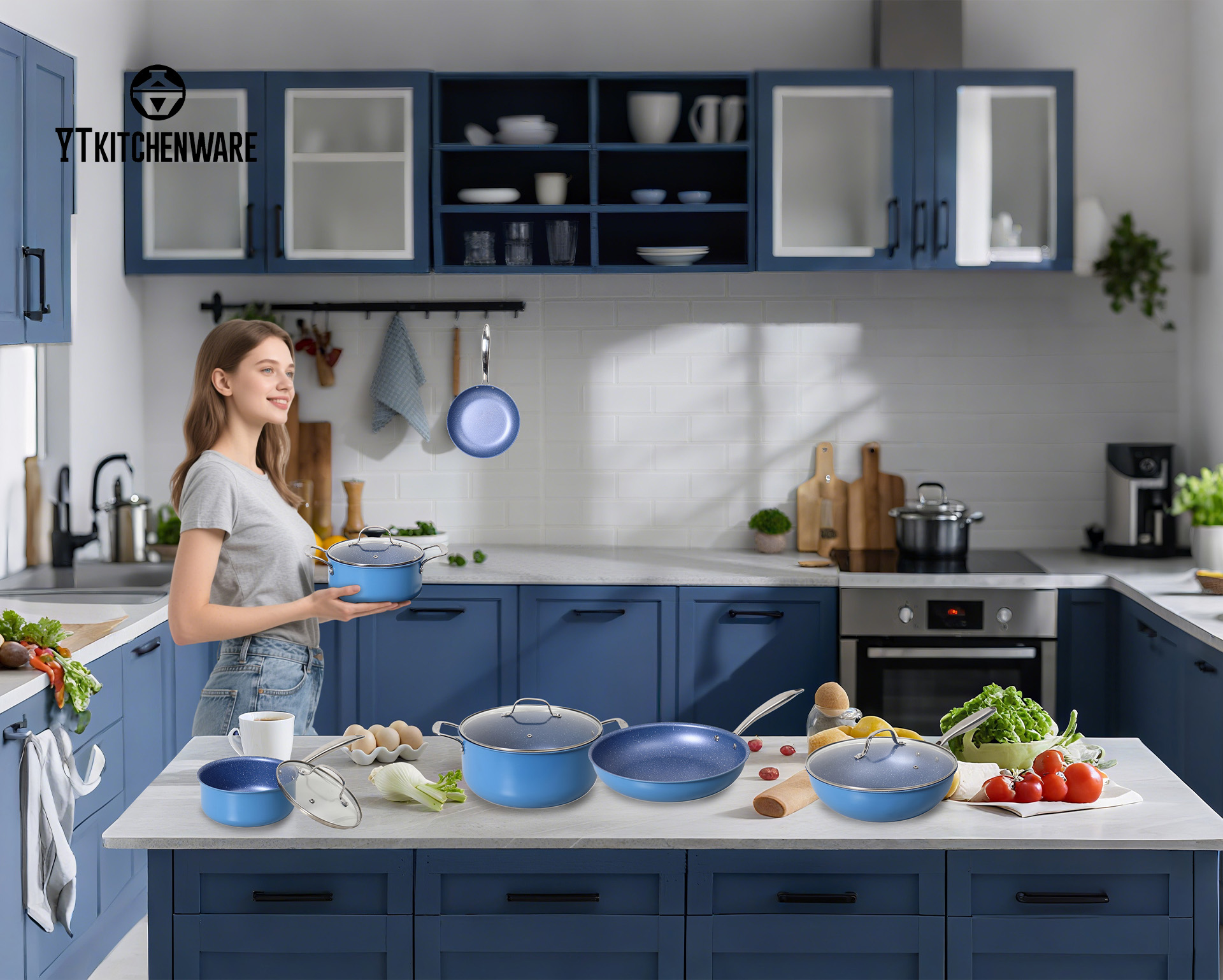
Health is the baseline, while practicality makes aluminum cookware stand out:
- Heat conduction: Aluminum’s thermal conductivity is ~3x that of iron and 1.5x that of stainless steel, heating evenly to avoid burning and shortening cooking time. High-end models with multi-layer composite bottoms work on gas, induction, and ceramic stoves.
- Convenience: Aluminum sets are over 50% lighter than cast iron, easy to handle and clean (smooth/non-stick surfaces need only a sponge wipe).
- Durability: Anodized aluminum is twice as hard as stainless steel, scratch-resistant, rust-free, and lasts 5-8 years with no extra maintenance.
How to Choose and Use Properly
To maximize benefits:
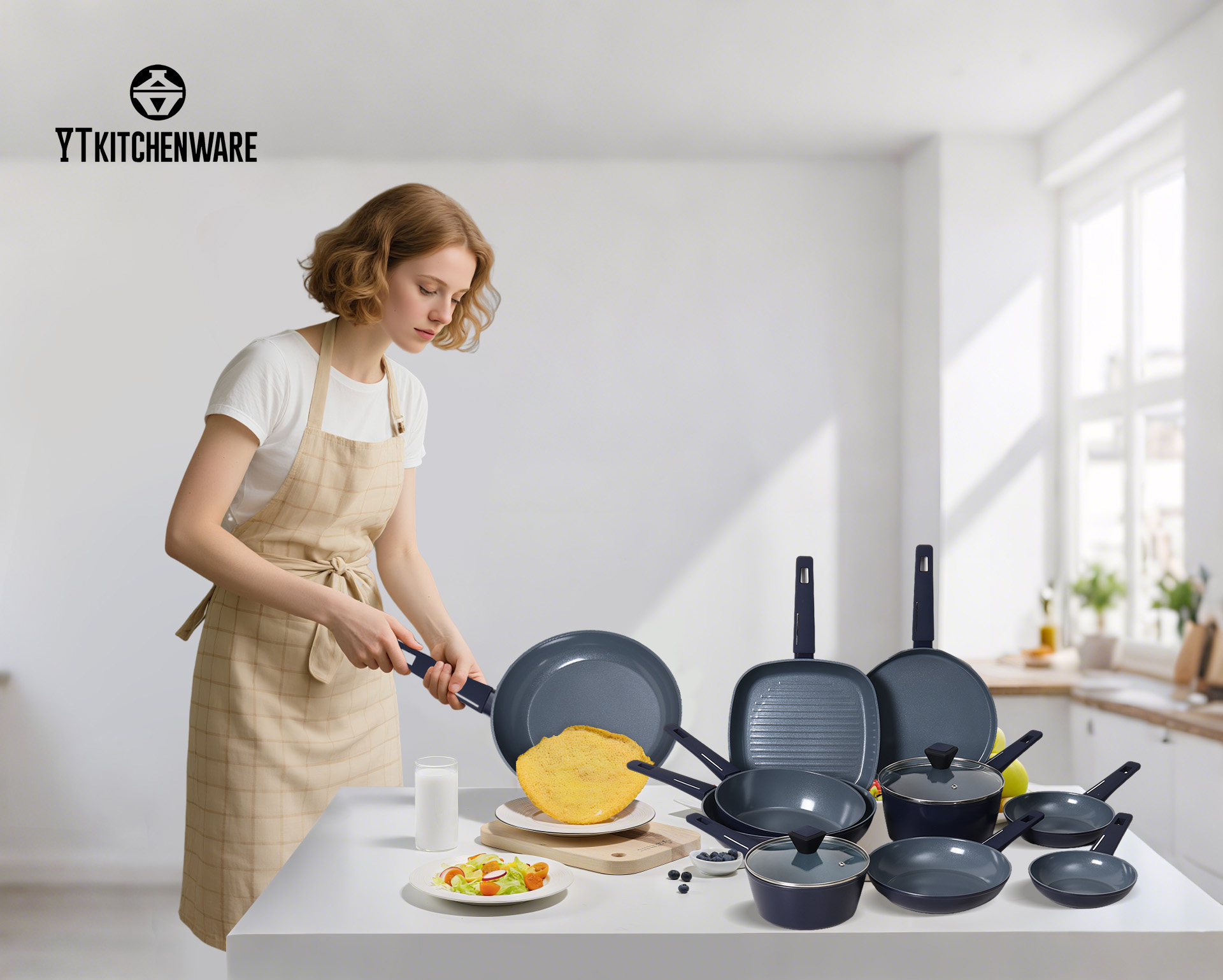
- Selection: Prioritize products labeled “food-grade non-stick coating” or “hard anodization”; avoid unbranded, uncertified cheap pans. Pick sizes based on family size (e.g., 24cm frying pan + 20cm soup pot + 30cm wok for 3-4 people) and check for flat bottoms and firm, heat-resistant handles.
- Usage: Avoid dry burning (keep temp <250℃), use silicone/wooden utensils, don’t store acidic/alkaline foods long-term, and skip steel wool or sudden cold water for hot pans.
Conclusion
Aluminum cookware’s popularity reflects dual demands for health and practicality. With mature coating tech, safety risks are controlled, and its lightweight, fast-heating, durable traits make it ideal for modern kitchens. Choosing reputable brands and using it properly achieves a perfect balance, making cooking safe and easy.