If there’s one thing we’ve learned from years of producing aluminum cookware, stainless-steel pots, and carbon-steel bakeware, it’s this: good-looking cookware sells faster. Sure, durability, thickness, and safety matter—but the moment a shopper sees a pot with a beautiful glossy finish or a soft matte texture, they’ve already formed an opinion. Before they read the specs, before they touch the handle, the surface finish has done half the job.
So let’s talk about what really makes cookware “good-looking” from a factory perspective—color trends, surface treatments, and how the right finishing process can instantly lift a product’s value.
Consumers don’t just buy cookware to cook. They buy it to match their kitchen, upgrade their lifestyle, and honestly—to feel good about the tools they use every day. That’s where factory-level finishing comes in. When a buyer holds a pot with a mirror-polished shine, it signals cleanliness and quality. When they see a satin or brushed finish, it feels premium and refined. When they find cookware with rich anodized colors, it stands out on the shelf like a fashion item rather than a kitchen tool. In most cases, they don’t even know why they like it—they just do.
From the production side, we focus on finishes that not only look good but also increase scratch resistance, improve corrosion protection, and extend the product’s lifespan. This is where the beauty meets the engineering.
The Power of Surface Treatments
Let’s break down the finishes buyers recognize, even if they don’t know the technical terms.
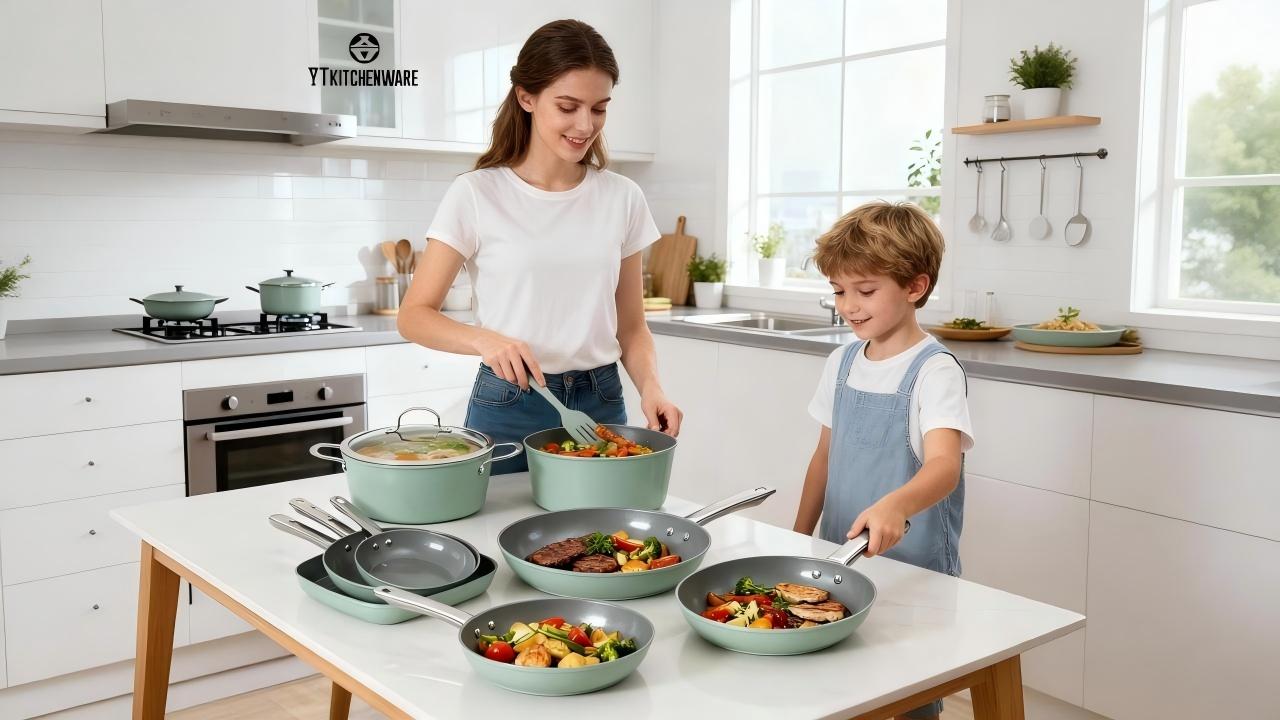
A mirror polish is that high-gloss, reflective look you usually find on stainless-steel cookware. It screams “clean,” “classic,” and “premium.” It takes more labor and precise polishing wheels to achieve, but the result is worth it: buyers notice this finish instantly in stores and online photos.
A satin finish is smoother, softer, more understated. It hides fingerprints, watermarks, and light scratches—something homeowners appreciate more than they realize. It’s one of the most practical finishes for daily-use cookware.
Then there’s hard anodizing, the trend that keeps growing year after year, especially for aluminum pots and pans. Anodizing doesn’t just change the color; it strengthens the metal surface. It gives cookware that deep charcoal gray or rich black look consumers love while also making it harder, more corrosion-resistant, and longer-lasting.
This blend of beauty and durability is exactly why more retail buyers keep asking for anodized products. It’s aesthetic appeal with real performance value.
Color Trends That Actually Sell
Different regions prefer different looks, but some color trends show up everywhere.
Shoppers want cookware that feels modern—charcoal black, dark gray, and matte finishes are strong global favorites. These tones look sleek, pair well with any kitchen style, and work perfectly with anodized aluminum.
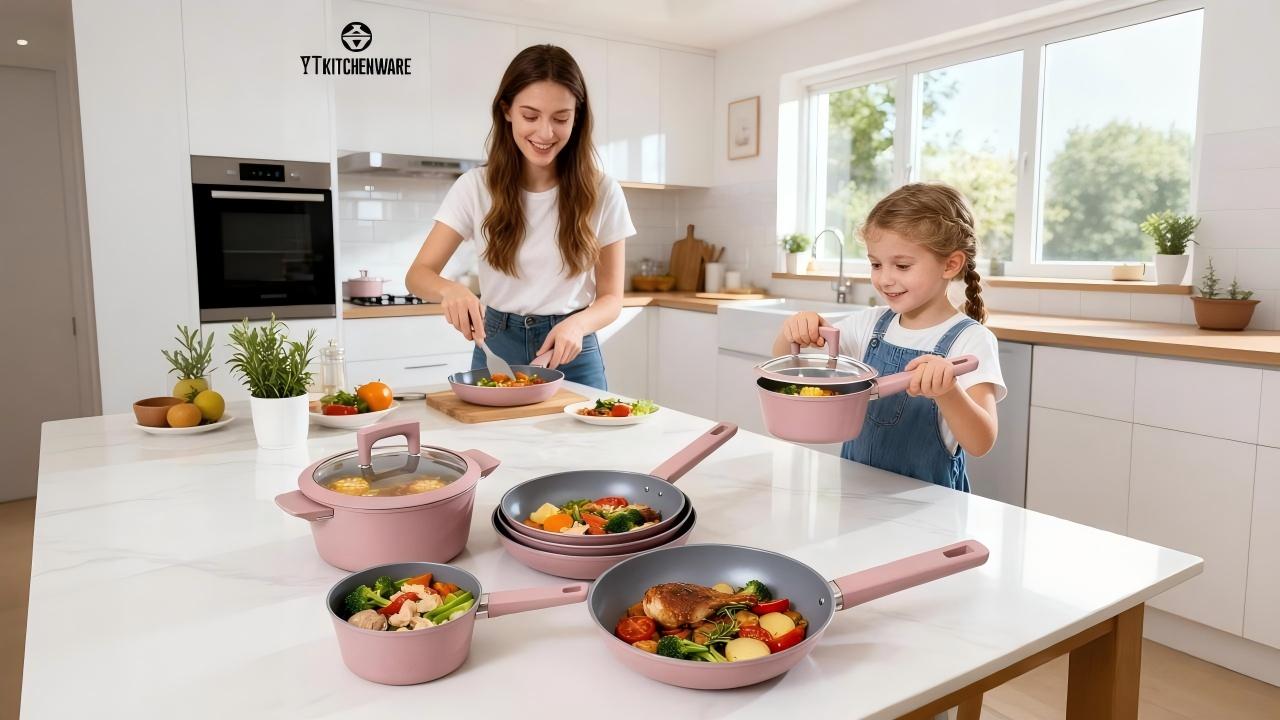
For markets leaning toward bold designs, red, blue, and even rose gold exterior coatings continue to stay popular. These colors have an emotional pull—they feel lively, warm, and “gift-ready,” making them easy sellers during holiday seasons.
But here’s the key: a good color is worthless without a good coating process. That’s why factories invest in controlled spraying lines, uniform baking temperatures, and consistent thickness measurements. A beautiful color that chips after a week destroys a brand. A stable, factory-tested coating builds brand trust.
Why Looks Matter So Much in the First Place
At the end of the day, buyers—whether retail or end consumers—care about one thing: “Will this product attract customers?” And nothing attracts customers faster than good design and strong visual impressions.
A well-finished pot tells a story:
It looks clean → It must be safe.
It looks premium → It must be high quality.
It looks modern → It must match today’s lifestyle.
This psychological impact, combined with functional surface treatments, is why brands invest heavily in cookware aesthetics. And from the factory’s perspective, we know exactly which finishes can help a product stand out, match local market taste, and stay beautiful even after years of use.
The Factory Advantage
A certified factory with controlled finishing lines can guarantee surface consistency, color accuracy, and treatment durability—all essential for professional buyers. We test adhesion, corrosion resistance, thickness, and even color fade under UV exposure. This makes the cookware not just eye-catching but retail-ready, market-specific, and long-lasting.
In short, good-looking cookware isn’t just about style. It’s about trust, performance, and brand value—and it starts right at the factory.